Ball vs. Jet Milling: Dry Techniques Explained
Ball milling and jet milling reduce ceramic and mineral feedstocks through different mechanisms. Ball mills use grinding media, while jet mills use high-velocity air and particle collisions. Selecting between them depends on feed size, target particle size distribution, material behavior, contamination limits and production volume.
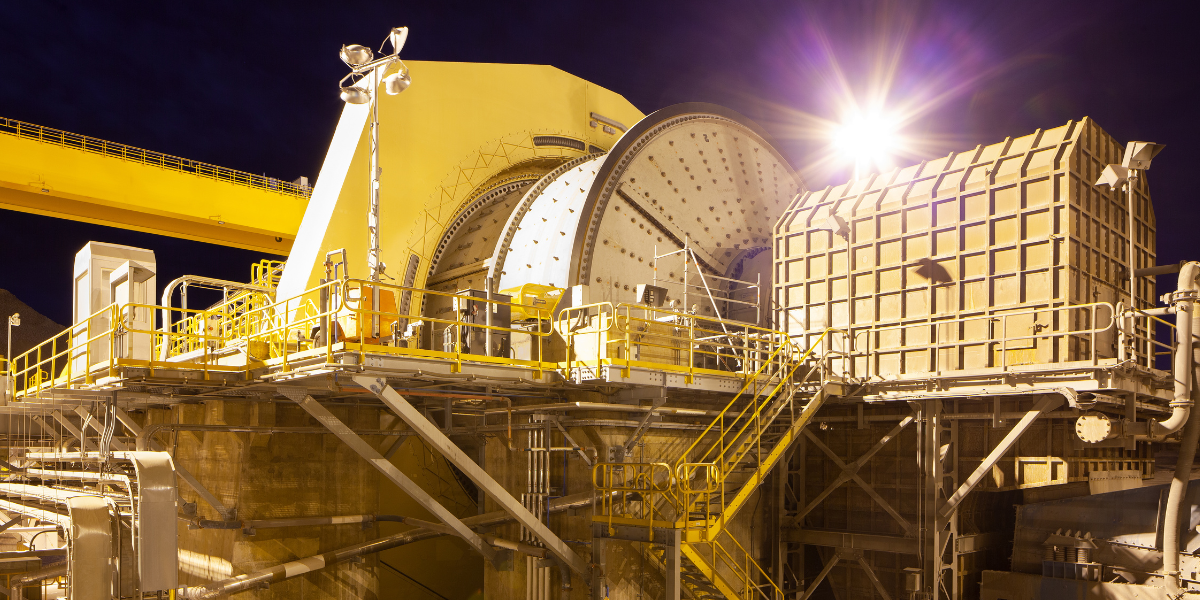
What is Ball Milling?Ball milling uses a rotating chamber filled with grinding media, such as ceramic or steel balls. Impact and attrition between the feed material, media and mill lining reduce the particle size. Mill linings may be selected from ceramic, rubber, polyurethane or other materials based on abrasion and contamination requirements.
Ball mills can process many ceramics, minerals and other industrial materials. The resulting particle size depends on mill design, media size, media loading, rotational speed, material hardness, feed size and milling time. IntoCeramics’ 100-liter ball mill commonly produces material near 325 mesh, while its 40-liter planetary mill can process suitable materials below 10 µm.
Reaching finer particle sizes may require smaller media, longer milling times or a higher-energy mill configuration. Extended milling can also increase energy use, media wear and contamination risk.
What is Jet Milling?
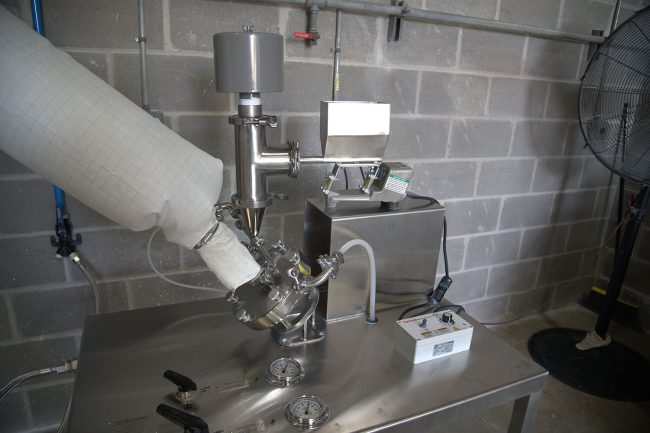
Jet milling uses high-velocity air to accelerate particles inside a milling chamber. Particle-to-particle and particle-to-wall collisions fracture the material without separate grinding media. Internal classification helps control which particles leave the chamber and which remain for additional milling.
Jet-milled particle size depends on material fracture behavior, feed size, moisture, air pressure, feed rate and classifier settings. IntoCeramics reports that its Micro-Jet mill can bring many minerals below approximately 3 µm d50, although results remain material-dependent. The system uses ceramic material-contact surfaces to reduce contamination during dry processing.
Ball Milling vs. Jet Milling: Key Differences
When it comes to ball milling and jet milling, knowing which one to use can make all the difference for your project. Let’s compare the two:
| Factor | Ball Milling | Jet Milling |
|---|---|---|
| Size-reduction mechanism | Impact and attrition between the material, grinding media and mill lining | High-velocity air produces particle-to-particle and particle-to-wall collisions |
| Grinding media | Requires ceramic, steel or other selected media | Does not use separate grinding media |
| Particle-size range | Commonly used for coarse through fine grinding; the result depends on mill and media configuration | Commonly selected for fine and ultra-fine dry powders |
| Feed requirements | Can accept larger feed than many jet mills, depending on equipment | Usually requires controlled feed size, moisture and flowability |
| Contamination | Media and liner wear may introduce contamination | Avoids grinding-media contamination, but contact-surface wear still needs evaluation |
| Distribution control | Milling time, media size, speed and loading affect the final distribution | Air pressure, feed rate and internal classification affect the final distribution |
| Heat generation | Extended milling can raise material temperature | Air expansion can limit temperature rise, but actual response depends on the system |
| Main selection factors | Feed size, target particle size, batch volume, media compatibility and milling time | Fine-particle target, feed consistency, air demand, throughput and contamination limits |
IntoCeramics Ball and Jet Milling Equipment
IntoCeramics operates several mills for different batch sizes and particle-size targets. The 100-liter ball mill can run with ceramic or stainless-steel contact surfaces and supports wet or dry processing. A 40-liter planetary mill uses smaller grinding media for finer particle-size targets. For dry jet milling, the Micro-Jet system uses high-velocity air and ceramic material-contact surfaces to limit contamination.
Reported equipment ranges provide a starting point, not a guaranteed result for every material. Trial work may be needed to evaluate feed behavior, achievable particle size, throughput, wear and final particle size distribution.
Choosing the Right Technique
Mill selection should begin with the required particle size distribution and allowable coarse fraction. Feed size, hardness, fracture behavior, moisture, batch volume, contamination limits and downstream processing also affect the decision.
Ball milling can accommodate larger feed particles and a broad range of batch sizes. Media size, loading and milling time can be adjusted to change the resulting distribution. Jet milling may be a better fit for fine dry powders when grinding-media contamination is a concern, but the feed must move consistently through the system and respond well to impact fracture.
Trial milling and particle size analysis provide a better basis for selection than d50 alone. Two materials with similar starting sizes may produce different distributions, throughput rates and wear characteristics in the same mill.
Tackle Your Dry Milling Needs with IntoCeramics
At IntoCeramics, we’ve got you covered with the right toll manufacturing equipment for both ball milling and jet milling. From coarse powders to ultra-fine particles, our team of experts knows how to optimize the process for your specific material. With our advanced line of machinery and years of ceramic manufacturing experience, we can help you achieve the perfect particle size for your project.
Reach out to us today to see how we can put our milling services to work for you.