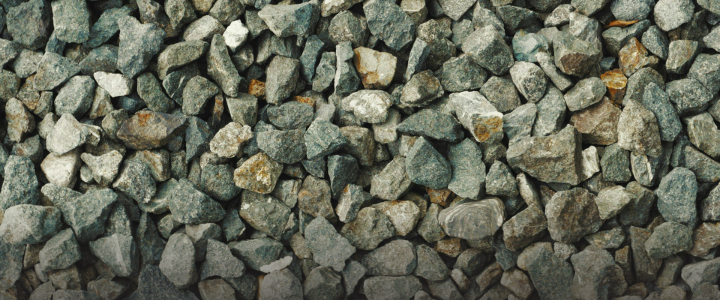
Lightweight Aggregate: Process, Materials, Applications
Modern lightweight aggregate (LWA) turns minerals and waste into high-value, low-density particles for construction and horticulture. Producing LWA at scale is a balancing act: you must precisely time the release of gas with the melting of the material. This article covers the essential material strategies and kiln controls needed for consistent production.
What is Lightweight Aggregate?
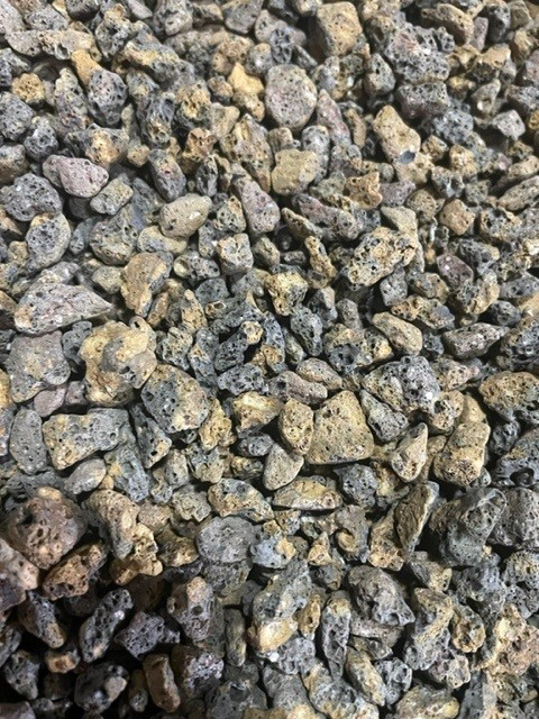
Lightweight aggregate is produced by heating mineral or waste-derived feedstocks until partial melting and gas evolution create a vesicular (honeycomb-like) structure. While traditionally produced from clay or shale, modern LWA can be engineered from a variety of waste-derived mineral feedstocks.
- Bulk density: typically range 300–1200 kg/m³
- Particle size: 0.5–20 mm
- Compressive strength: 1–15 MPa (loose basis)
- Primary Mechanism: Gas generation (carbonates, organics, sulfates) must occur simultaneously with the development of a viscous silicate phase to entrap evolving gases. Subsequent cooling stabilizes this pore structure.
Raw Materials and Feedstock Selection
Material selection drives expansion behavior and final properties. In practice, these materials rarely behave consistently without adjustment, particularly when alternative feedstocks are introduced.
Alternative and Waste-Derived Sources
- Waste glass (soda-lime systems)
- Mine tailings (silicate-rich)
- Red clay/sand blends
- Sludge solids from dewatering operations
These materials are frequently treated as disposal liabilities but can be converted into lightweight aggregate with proper formulation. Waste-derived feedstocks introduce variability in flux content, LOI, and impurity phases, which can shift expansion temperature windows and increase sensitivity to kiln profile and residence time compared to conventional clay systems.
Key Material Parameters
- Particle size distribution (PSD): d50: 5–50 µm prior to granulation
- Loss on ignition (LOI): 3–12% for effective gas generation
- Flux content (Na2O, K2O, CaO): 3–10% to control melt viscosity
- Iron content: influences redox reactions and gas evolution
Tradeoffs:
Higher flux content reduces expansion temperature but increases the risk of structural collapse due to reduced melt viscosity. Lower flux content raises firing temperature requirements and energy consumption. Excess fines reduce permeability during burnout, limiting gas redistribution and affecting uniform expansion.
Process Overview
1. Size Reduction and Blending
Feedstocks are milled to controlled PSD to promote uniform reactions. In production, small shifts in PSD can change melt formation and expansion response.
- Target d90: <75 µm
- Mixing for compositional uniformity
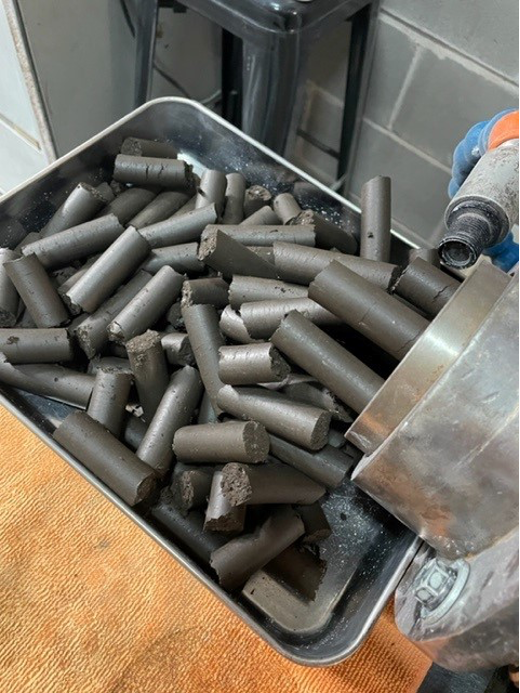
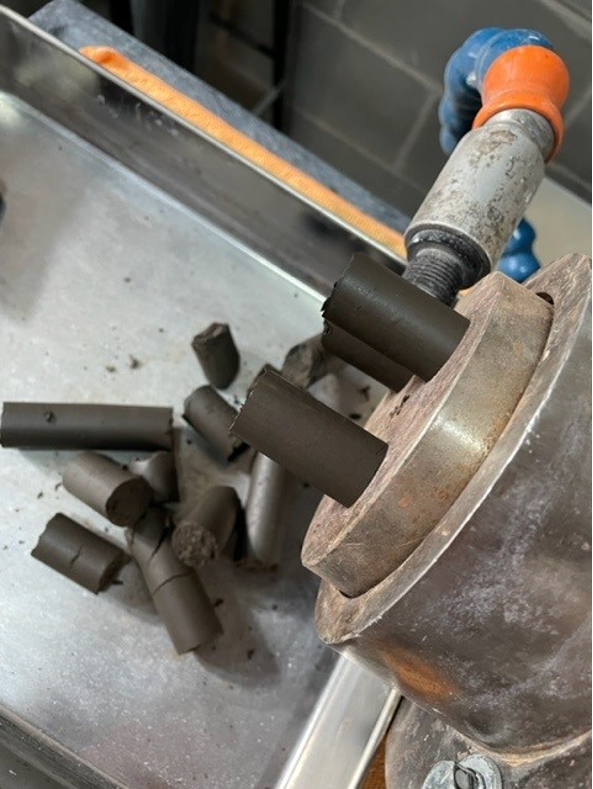
2. Granulation / Pelletization
Granules are formed to enable uniform expansion in the kiln.
- Disc or drum granulation
- Moisture: 12–20% for plasticity
- Green pellet size: 2–15 mm
Granule integrity directly influences gas retention, shape uniformity, and final strength distribution. In many operations, pellet quality is one of the primary drivers of inconsistent expansion. Weak granules can degrade during handling or early heating, generating fines that disrupt expansion and lead to inconsistent density within the same kiln load. Variation in pellet density also contributes to non-uniform expansion across kiln zones.
3. Thermal Expansion (Rotary Kiln – Primary, Tunnel Kiln – Limited Applications)
Critical stage where pore formation occurs.
Typical temperature ranges:
- Clay/shale systems: 1050–1200°C
- Glass-based systems: 800–1000°C
Key phenomena include decomposition of carbonates releasing CO₂, oxidation and burnout of carbonaceous material generating gas, formation of a viscous silicate melt, and entrapment of gases within the softened matrix. These reactions must align with the viscosity window of the material to achieve stable expansion. When this alignment drifts, expansion becomes inconsistent across the kiln.
Heat-work considerations:
These variables act together to define effective heat-work within the kiln.
- Ramp rates: 5–15°C/min depending on feed
- Residence time: 15–45 minutes in expansion zone
- Atmosphere: oxidizing vs slightly reducing impacts gas generation. In rotary kilns, burner tuning and airflow distribution influence local atmosphere, which can shift gas evolution and expansion behavior within the material bed.
4. Cooling and Stabilization
Controlled cooling limits thermal stress and stabilizes the expanded structure, reducing the risk of pore collapse.
- Rapid quench can freeze pore structure
- Slow cooling improves structural integrity
Application-Specific Requirements
- Structural concrete: 600–1000 kg/m³, low absorption, consistent grading.
- Geotechnical / insulation: Very low density (<600 kg/m³), high porosity.
- Filtration / horticulture: Chemical stability, high water retention, stable pore network.
- Asphalt: High abrasion resistance and controlled angularity.
Production Challenges at Scale
- Variability in raw material chemistry
- Inconsistent expansion due to PSD variation
- Pellet strength leading to breakage in kiln
- Over/under expansion from kiln temperature drift
- Agglomeration or sticking in rotary kilns
- Ring formation or localized buildup disrupting heat distribution and residence time
- Segregation of feed or pellets leading to non-uniform expansion
Consistent production requires alignment between feedstock preparation, granulation, and kiln profile to avoid density variation and reduced yield. These issues are common in operations where feed consistency and kiln control are not fully aligned.
Discover IntoCeramics Lightweight Aggregates Testing
IntoCeramics is a ceramic manufacturing company that supports lightweight aggregate development from lab feasibility through full-scale production. Our ceramic consultants specialize in raw material evaluation, waste stream minerals, analytical testing services, and more.